G#m7 jazz voicings on guitar
G#m7 (G sharp minor seventh) has the notes G♯, B, D♯, F♯. A voicing is the order they appear in from low to high, and on which strings. Here are 4 shells, 8 drop 2 and 8 drop 3 voicings, worked out from the instrument's tuning, each with the degree of its lowest and highest note.
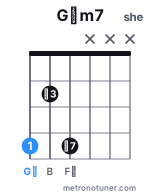
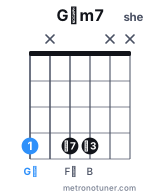
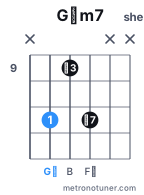
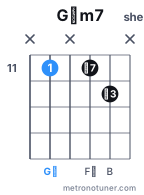
Shell voicings (1-3-7 and 1-7-3)
A shell has only the root, the 3rd and the 7th: the notes that say whether the chord is major, minor or dominant. The 5th is left out. It is the backbone of jazz rhythm guitar and leaves room for the bass and the piano. The root sits on the 6th or the 5th string.
With the root on the 6th string, 1-7-3 fits on strings 6-4-3; 1-3-7 would need a 6-fret stretch there, so it goes on 6-5-4. With the root on the 5th string it is the other way round: 1-3-7 sits on 5-4-3 and 1-7-3 on 5-3-2.
-
1-♭3-♭7strings 6-5-4
-
1-♭7-♭3strings 6-4-3
-
1-♭3-♭7strings 5-4-3
-
1-♭7-♭3strings 5-3-2
Drop 2
Take the chord in close position (all four notes within an octave) and drop the second note from the top by an octave: the voices spread out and fit on four adjacent strings. Each of the four inversions puts a different note in the bass.
Strings 4-3-2-1
-
bass 5 · top ♭7strings 4-3-2-1
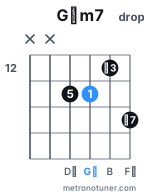
-
bass ♭7 · top 1strings 4-3-2-1
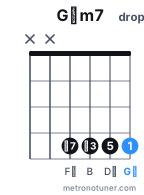
-
bass 1 · top ♭3strings 4-3-2-1
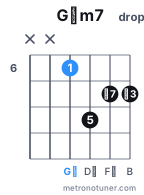
-
bass ♭3 · top 5strings 4-3-2-1
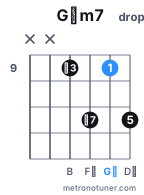
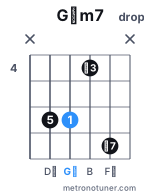
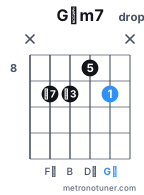
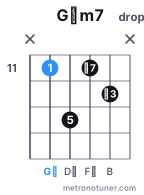
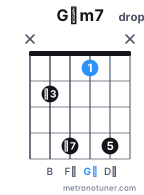
Strings 5-4-3-2
-
bass 5 · top ♭7strings 5-4-3-2
-
bass ♭7 · top 1strings 5-4-3-2
-
bass 1 · top ♭3strings 5-4-3-2
-
bass ♭3 · top 5strings 5-4-3-2
Drop 3
From close position, drop the third note from the top by an octave: the bass moves further from the other voices, and the shape skips a string (6-4-3-2 or 5-3-2-1). Good for keeping the bass on the low strings and the melody on top.
Strings 6-4-3-2
-
bass ♭3 · top ♭7strings 6-4-3-2
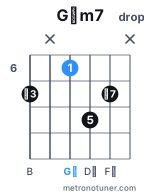
-
bass 5 · top 1strings 6-4-3-2
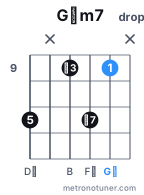
-
bass ♭7 · top ♭3strings 6-4-3-2
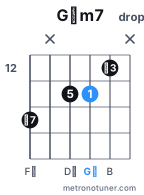
-
bass 1 · top 5strings 6-4-3-2
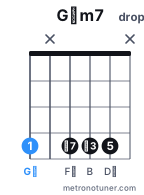
Strings 5-3-2-1
-
bass ♭3 · top ♭7strings 5-3-2-1
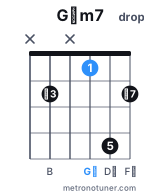
-
bass 5 · top 1strings 5-3-2-1
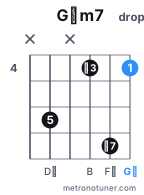
-
bass ♭7 · top ♭3strings 5-3-2-1
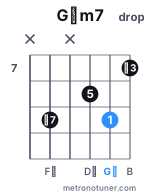
-
bass 1 · top 5strings 5-3-2-1
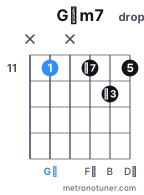
With extensions
In jazz, a seventh chord gets its colour by swapping one note: the 9th replaces the root, and the 13th (or the 11th, on a minor chord) replaces the 5th. The bass player covers the root. Below, those swaps in drop 2.
G#m9: the 9th replaces the root
-
bass 5 · top ♭7strings 4-3-2-1
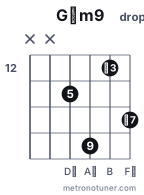
-
bass ♭7 · top 9strings 4-3-2-1
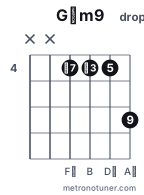
-
bass 9 · top ♭3strings 4-3-2-1
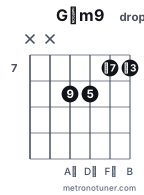
-
bass ♭3 · top 5strings 4-3-2-1
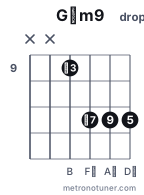
G#m11: the 11th replaces the 5th
-
bass 11 · top ♭7strings 4-3-2-1
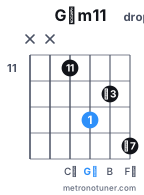
-
bass ♭7 · top 1strings 4-3-2-1
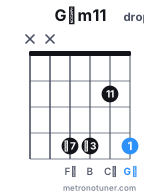
-
bass 1 · top ♭3strings 4-3-2-1
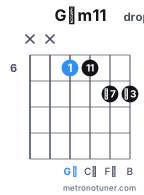
-
bass ♭3 · top 11strings 4-3-2-1
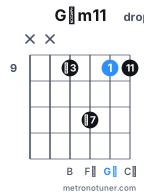
Voicings of other G sharp chords
Minor seventh voicings in other keys
Frequently asked questions
What is a drop 2 voicing?
It is a seventh chord in close position (all four notes within an octave) with the second note from the top played an octave lower. The chord opens up and fits on four adjacent guitar strings; with four inversions, every chord note can be in the bass.
What is the difference between drop 2 and drop 3?
In drop 2 the second note from the top goes down; in drop 3, the third. Drop 3 keeps the bass further from the other voices and skips a string (6-4-3-2 or 5-3-2-1); drop 2 uses four adjacent strings.
What is a shell voicing?
It is the chord reduced to root, 3rd and 7th, the three notes that define its quality. With no 5th and no extensions it sounds clean and leaves room for the bass, the piano and the melody.